Lost Paper: Strategic Typography for Modern Brand Positioning
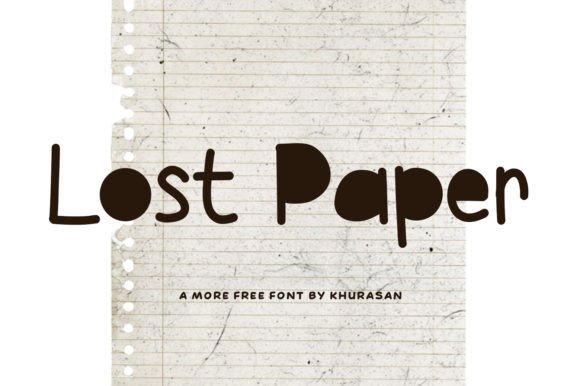
In the crowded landscape of digital and print media, typography is rarely just about legibility. It is a primary vehicle for brand personality, emotional resonance, and strategic positioning. For designers, marketers, and business owners seeking to differentiate their visual identity without resorting to chaotic or overly complex aesthetics, Lost Paper offers a compelling solution. This modern, cute display font bridges the gap between approachable charm and professional clarity, making it an invaluable asset for projects that require both warmth and distinctiveness.
Choosing a typeface is a decision that impacts everything from customer perception to conversion rates. When you integrate Lost Paper into your creative toolkit, you are not merely selecting letters; you are choosing a tone of voice. Whether you are designing a logo for a boutique café, laying out a magazine spread, or creating social media banners, understanding the strategic utility of this font can elevate your output from generic to memorable.
The Strategic Value of Approachable Design
Modern branding has shifted away from cold, corporate minimalism toward identities that feel human, accessible, and authentic. Consumers today crave connection. They respond to brands that appear thoughtful and inviting rather than distant and imposing. This is where Lost Paper excels. Its design characteristics—soft curves, balanced proportions, and a playful yet structured demeanor—communicate friendliness without sacrificing professionalism.
For entrepreneurs and small business owners, this balance is critical. A font that is too whimsical may undermine credibility in financial or legal contexts, while a font that is too rigid may fail to engage audiences in lifestyle, education, or creative sectors. Lost Paper sits comfortably in the middle ground. It allows businesses to project competence while maintaining an open, welcoming atmosphere. This duality supports better customer experience by reducing psychological barriers between the brand and the consumer.
Consider the psychology of shape. Rounded, organic forms often evoke feelings of safety and comfort. By utilizing Lost Paper in your headers and key visual elements, you subtly signal to your audience that your brand is safe, reliable, and easy to interact with. This is particularly effective for industries such as healthcare, education, childcare, artisanal goods, and hospitality, where trust and comfort are paramount to the service offering.
Versatility Across Media and Platforms
One of the most significant advantages of Lost Paper is its adaptability. In today’s omnichannel environment, your brand identity must remain consistent across various mediums, from large-format prints to small mobile screens. A font that works well on a poster but fails on a website header creates fragmentation in your brand narrative. Lost Paper is engineered to maintain its integrity across diverse applications.
- Posters and Banners: The bold, display nature of the font ensures high visibility and impact at a distance. It captures attention quickly, which is essential for event promotions, retail signage, and advertising campaigns.
- Logos and Brand Marks: Its unique character shapes provide distinctiveness, helping your logo stand out in a saturated market. It avoids the clichés of overused sans-serifs while remaining clean enough to be scalable.
- Magazines and Book Covers: For editorial design, Lost Paper adds a layer of personality to titles and chapter headings. It invites readers in, suggesting that the content within is engaging and accessible.
- Digital Interfaces: When used sparingly for headers or call-to-action buttons, it adds a touch of warmth to user interfaces, enhancing the overall usability and emotional appeal of apps and websites.
This versatility means you can standardize your typographic choices, reducing the cognitive load on your design team and ensuring a cohesive brand experience. Instead of searching for different fonts for different projects, Lost Paper can serve as a foundational element in your design system, adapted through weight, size, and spacing to suit specific contexts.
Intentional Application: When and How to Use Lost Paper
While Lost Paper is versatile, it is not a universal substitute for all typographic needs. Strategic design requires knowing when to deploy a display font and when to rely on more neutral typefaces. Using Lost Paper intentionally involves understanding its strengths and limitations.
Best Use Cases:
- Headlines and Titles: This is the primary domain of Lost Paper. Its decorative qualities shine when given space to breathe. Use it for main headings to establish hierarchy and draw the eye.
- Short-Form Copy: Quotes, pull-quotes, and short captions benefit from the font’s personality. It adds emphasis and emotional weight to brief statements.
- Brand Identity Elements: Logos, taglines, and packaging headers leverage the font’s uniqueness to create brand recall.
Contexts to Avoid:
Due to its display nature, Lost Paper is not suitable for long-form body text. Reading paragraphs of highly stylized text can cause eye fatigue and reduce comprehension. For body copy, pair Lost Paper with a clean, highly legible sans-serif or serif font. This contrast creates visual interest while ensuring readability. The strategic pairing of a distinctive display font with a neutral body font is a hallmark of sophisticated design.
Furthermore, consider the cultural and contextual fit. If your brand positions itself as ultra-luxury, exclusive, or strictly traditional, the "cute" and "modern" attributes of Lost Paper might conflict with your desired image. Always align your typographic choices with your broader brand strategy and target audience expectations.
Risks of Unplanned Typographic Choices
Adopting a new font like Lost Paper without a clear strategic framework can lead to inconsistent branding and mixed messages. One common risk is overuse. When every element on a page uses a display font, nothing stands out. Visual hierarchy collapses, and the design becomes noisy and confusing. This dilutes the impact of your key messages and frustrates users trying to navigate your content.
Another risk is mismatched tone. If your visual language suggests playfulness and approachability through Lost Paper, but your written content is overly formal, technical, or aggressive, you create cognitive dissonance for the reader. This inconsistency can erode trust and make your brand appear disjointed or unprofessional. Ensure that your tone of voice in writing aligns with the tone of voice in your typography.
Additionally, neglecting accessibility considerations can exclude portions of your audience. While Lost Paper is generally clear, ensure sufficient contrast and size when using it, especially for users with visual impairments. Always test your designs across different devices and lighting conditions to guarantee that your aesthetic choices do not compromise usability.
Planning for Long-Term Brand Consistency
To maximize the return on your investment in Lost Paper, integrate it into a comprehensive brand style guide. Define clear rules for its usage, including minimum sizes, acceptable color combinations, and pairing recommendations. Documenting these guidelines ensures that everyone involved in creating content for your brand—from internal marketing teams to external freelancers—applies the font consistently.
Consistency builds recognition. Over time, as your audience repeatedly encounters Lost Paper in your communications, they begin to associate its visual style with your brand values. This associative learning strengthens brand equity and makes your marketing efforts more effective. A well-managed typographic system reduces decision fatigue for your team and accelerates the production of high-quality materials.
Moreover, consider the longevity of your choice. Trends in typography come and go, but Lost Paper is designed with a balance of modernity and timelessness. Its clean lines prevent it from feeling dated quickly, while its unique character prevents it from blending into the background. This durability supports long-term branding strategies, reducing the need for frequent and costly rebrands.
Enhancing Creativity and Productivity
For creators and designers, having a reliable, versatile font like Lost Paper in your arsenal can significantly boost productivity. Instead of spending hours searching for the perfect typeface for each new project, you can start with a known quantity. This allows you to focus more on layout, composition, and message refinement rather than basic asset selection.
The ease of matching Lost Paper with a wide range of design elements also fosters creativity. Because it is so adaptable, it encourages experimentation. You can try it with bold colors, minimalist layouts, intricate illustrations, or photographic backgrounds. Its flexibility invites you to push boundaries and explore new visual directions without the fear that the font will clash with your concept.
Educators and publishers can also benefit from this efficiency. When creating learning materials, textbooks, or educational posters, Lost Paper can make dense information feel more approachable. It helps break down barriers to learning by presenting content in a friendly, engaging format. This subtle shift in presentation can improve student engagement and retention rates.
Making the Decision to Invest in Quality Typography
Ultimately, the decision to use Lost Paper is a decision to prioritize quality and intentionality in your visual communication. In a world where attention is scarce, every design element must work hard to earn and hold that attention. A well-chosen font does more than display words; it shapes perception, guides emotion, and reinforces brand identity.
By adding Lost Paper to your creative ideas, you are investing in a tool that enhances clarity, boosts appeal, and supports strategic goals. Whether you are launching a new product, refreshing an existing brand, or simply looking to elevate your daily design output, this font offers the reliability and charm needed to make your projects stand out.
Take the time to experiment with Lost Paper in your next project. Observe how it interacts with your other design elements. Notice how it changes the feel of your headlines. Use it thoughtfully, pair it wisely, and let it help you communicate with greater impact and precision. The right typography is not just an aesthetic choice; it is a strategic advantage.