Shock Brat: Evaluating a Modern Brush Font for Bold Design Projects
In the crowded landscape of digital typography, finding a typeface that balances raw energy with professional legibility is a common challenge for designers. Shock Brat emerges as a compelling solution in this space, offering a modern brush aesthetic that captures attention without sacrificing usability. As a display font, it is engineered specifically for high-impact visual communication, making it a frequent consideration for projects ranging from promotional posters to brand identity systems. Understanding where this typeface fits within the broader ecosystem of design resources requires a look at its structural characteristics, practical applications, and how it compares to other stylistic alternatives.
Defining the Aesthetic and Structural Identity
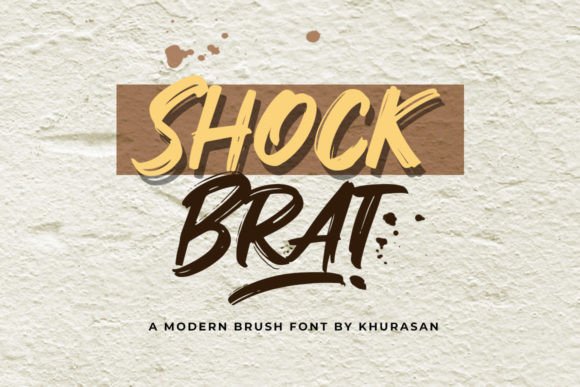
At its core, Shock Brat is defined by its quirky, hand-drawn appearance. Unlike traditional serif or sans-serif fonts that prioritize uniformity and grid-based alignment, this typeface embraces the irregularities inherent in manual brushwork. The strokes vary in thickness, mimicking the pressure changes of a real brush pen, which adds a layer of organic warmth to digital designs. This distinctiveness is not merely decorative; it serves a functional purpose by breaking the visual monotony often found in corporate or minimalist layouts.
The font’s "modern" classification stems from its clean edges and contemporary spacing. While it retains the roughness of a brush script, it avoids the excessive clutter or illegibility that plagues many novelty fonts. This balance makes it versatile enough for both playful and serious contexts, provided the surrounding design elements support its bold personality. For designers evaluating typography options, Shock Brat represents a middle ground between chaotic graffiti styles and rigid geometric sans-serifs, offering a unique voice that feels both current and timeless.
Practical Applications and Best-Fit Scenarios
Choosing the right font is less about personal preference and more about contextual fit. Shock Brat excels in scenarios where immediate visual impact is required. Its primary strength lies in short-form text, such as headlines, titles, and logos, where large letterforms can showcase the intricate details of the brush strokes.
- Posters and Banners: In large-format printing, the thick strokes of Shock Brat ensure readability from a distance. The font’s inherent energy draws the eye, making it ideal for event promotions, concert flyers, or retail sales banners.
- Logo Design: For brands seeking to project creativity, approachability, or rebellion, this typeface provides a strong foundational element. It works particularly well for lifestyle brands, creative agencies, and food industries where a handmade feel adds perceived value.
- Book Covers and Magazine Headers: In publishing, the font can anchor a cover design, creating a focal point that contrasts effectively with photographic elements or minimalist backgrounds. Its quirky nature suggests narrative intrigue, suitable for fiction or contemporary non-fiction.
However, it is crucial to recognize the limitations of display fonts. Shock Brat is not designed for body copy. Using it for long paragraphs would result in reader fatigue due to the irregular baseline and varying character widths. Effective design practice dictates pairing it with a neutral, highly legible sans-serif or serif font for supporting text. This contrast ensures that the headline grabs attention while the body content remains easy to digest.
Comparative Analysis: Shock Brat vs. Traditional Alternatives
When evaluating Shock Brat against other typography options, several key differentiators become apparent. Designers often choose between script fonts, standard sans-serifs, and other brush-style typefaces. Each category offers distinct advantages and tradeoffs.
Compared to elegant script fonts, which often convey luxury or formality, Shock Brat leans into a more rugged, informal vibe. Script fonts typically feature connected letters and fluid curves, which can be difficult to read at smaller sizes or in all-caps settings. Shock Brat, being a disconnected brush font, maintains clarity even when used in uppercase, making it more versatile for bold statements.
In contrast to geometric sans-serifs, which are prized for their neutrality and corporate safety, Shock Brat injects personality. While a font like Helvetica or Futura might fade into the background to let content speak, Shock Brat actively participates in the message. This is a tradeoff: you gain emotional resonance but lose some of the universal adaptability of neutral typefaces. For a tech startup aiming for trust and stability, a sans-serif might be safer. For a creative studio aiming for disruption, Shock Brat is the stronger candidate.
Within the brush font category itself, variations exist in terms of roughness and consistency. Some brush fonts mimic dry brushes with significant texture and noise, which can cause printing issues or visual clutter on low-resolution screens. Shock Brat appears to strike a balance, offering enough texture to feel authentic but maintaining clean enough vectors for crisp rendering across digital and print media. This technical reliability is a significant factor for professionals who need consistent output across various platforms.
Decision Factors for Designers and Brands
Selecting Shock Brat should be a deliberate decision based on specific project goals. Several factors should guide this evaluation process.
- Brand Personality: Does the brand identity align with traits like energy, creativity, informality, or boldness? If the brand values tradition, precision, or minimalism, this font may create cognitive dissonance.
- Medium and Scale: Consider where the text will appear. Shock Brat thrives in large sizes. If the primary use case involves small print, such as legal disclaimers or footnotes, this font is inappropriate. Ensure the primary application allows the letterforms to breathe.
- Legibility Requirements: Evaluate the target audience. While generally readable, stylized fonts can pose challenges for older demographics or users with visual impairments. Testing the font in situ is essential to ensure it meets accessibility standards.
- Pairing Potential: Assess the existing design system. Shock Brat requires a supportive partner font. If the current toolkit lacks a versatile, neutral typeface for body text, integrating Shock Brat may require additional resource acquisition.
Furthermore, consider the longevity of the design trend. Brush fonts have enjoyed sustained popularity due to their humanizing effect in an increasingly digital world. However, trends evolve. Shock Brat’s modern take suggests it is built to remain relevant longer than fleeting novelty fonts, but designers should still consider whether the style aligns with the long-term vision of the project.
Technical Considerations and Implementation
From a technical standpoint, implementing Shock Brat requires attention to spacing and kerning. Brush fonts often have unique side bearings that may need adjustment depending on the specific letter combinations. Designers should manually review kerning pairs, especially for logos, to ensure optimal visual balance. Automated spacing tools may not fully account for the irregular shapes of brush strokes, leading to awkward gaps or overlaps.
Additionally, file format compatibility is key. Ensuring the font is available in standard formats like OTF or TTF guarantees broad compatibility with design software such as Adobe Creative Cloud, Affinity Suite, and web-based design tools. For web use, converting the font to WOFF or WOFF2 formats ensures fast loading times and consistent rendering across browsers, preserving the integrity of the design on digital platforms.
Final Thoughts on Choosing Shock Brat
Shock Brat stands out as a robust option for designers seeking a modern brush font that combines personality with professionalism. It is not a universal solution, but rather a specialized tool for specific communicative needs. Its strengths lie in its ability to command attention and convey a sense of handmade authenticity, making it ideal for posters, logos, and cover designs. However, its effectiveness depends heavily on proper usage, including appropriate sizing, thoughtful pairing, and alignment with brand identity.
For those comparing typography options, Shock Brat offers a refreshing alternative to sterile geometric fonts and overly ornate scripts. It invites a more dynamic approach to layout and composition. By understanding its distinct characteristics and limitations, designers can make informed decisions that enhance visual communication rather than hinder it. Whether refreshing a brand identity or launching a new creative campaign, this typeface provides the quirky, bold presence needed to make a lasting impression.