Outla: Elevating Digital Design with Quirky Typography
In the vast and often saturated landscape of digital typography, finding a typeface that strikes the perfect balance between personality and professionalism can feel like searching for a needle in a haystack. Designers, marketers, and content creators are constantly on the hunt for fonts that do more than just convey information; they seek tools that evoke emotion, establish brand identity, and capture attention in an instant. Enter Outla, a display font that has rapidly gained traction among creative professionals for its distinct character and versatile application. With its cool, fun aesthetic and quirky, irregular baseline, Outla is not merely a collection of letters but a design asset capable of transforming mundane layouts into engaging visual experiences.
This article explores the unique characteristics of Outla, examining why it has become a wonderful asset to many font libraries and how it can enhance various creative projects. From branding initiatives to educational materials, we will delve into the practical applications, technical considerations, and strategic advantages of incorporating this distinctive typeface into your design workflow.
The Anatomy of Character: Understanding Outla’s Design Philosophy
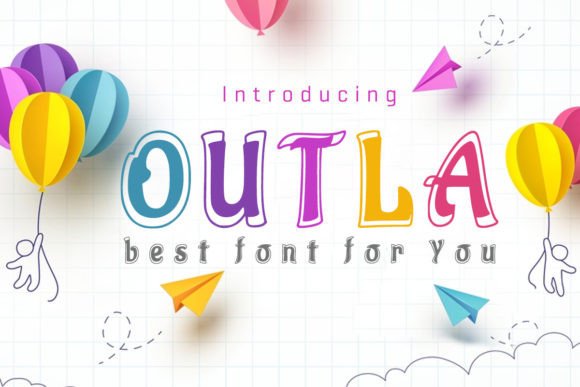
To truly appreciate the utility of Outla, one must first understand its structural nuances. Unlike traditional serif or sans-serif fonts that prioritize uniformity and rigid alignment, Outla embraces imperfection as a core design principle. The most striking feature of this typeface is its irregular baseline. This means that the letters do not sit on a perfectly straight line; instead, they dance slightly up and down, creating a rhythmic, organic flow that mimics hand-lettering while maintaining the precision of digital vector graphics.
This quirky baseline serves a specific psychological purpose. In design theory, straight lines often convey stability, authority, and seriousness. Conversely, irregular lines suggest movement, playfulness, and approachability. By utilizing Outla, designers can instantly soften the tone of a message, making it feel more human and less corporate. The font’s strokes are generally bold and confident, ensuring high visibility, yet the terminals and curves retain a softness that prevents the text from appearing aggressive.
Furthermore, Outla is categorized as a display font. This classification is crucial for users to understand. Display fonts are designed for use at large sizes, such as in headlines, titles, logos, and short bursts of text. They are not intended for long-form body copy, where readability over extended periods is paramount. Recognizing this distinction allows creators to leverage Outla’s strengths without compromising the user experience in dense textual environments.
Strategic Applications Across Industries
The versatility of Outla lies in its ability to adapt to various contexts while retaining its unique voice. While it is inherently playful, its clean lines prevent it from becoming overly childish or chaotic. This balance makes it suitable for a wide range of industries and use cases.
Branding and Identity
For startups and small businesses looking to differentiate themselves in crowded markets, Outla offers a compelling solution. A logo or brand mark using this font immediately signals a brand personality that is innovative, friendly, and unconventional. Consider a tech startup focused on user-friendly apps or a creative agency specializing in social media management. Using Outla in their primary logo or tagline can communicate accessibility and creativity before the customer even reads the rest of the content. It acts as a visual shorthand for "we are different, and we are fun."
Educational and Youth-Oriented Content
Educators and publishers creating materials for children or teenagers often struggle to find fonts that are engaging without being distracting. Outla fits this niche exceptionally well. Its irregular baseline captures the attention of younger audiences, who are drawn to dynamic and non-static visuals. Whether used in textbook headers, worksheet titles, or interactive e-learning modules, Outla can make learning materials feel less like chores and more like adventures. However, it is essential to pair it with a highly readable sans-serif font for the body text to ensure that the educational content remains accessible.
Digital Marketing and Social Media
In the fast-paced world of social media, stopping the scroll is the primary objective. Graphics for Instagram, Pinterest, or TikTok need to be visually arresting within milliseconds. Outla’s bold structure and quirky nature make it ideal for overlay text on images, quote graphics, and promotional banners. When used in conjunction with vibrant colors and high-quality imagery, Outla helps create a cohesive and eye-catching aesthetic that encourages engagement. Its distinct look also aids in brand recall, as users begin to associate that specific typographic style with your content.
Implementing Outla: Best Practices for Designers
While Outla is a powerful tool, its effectiveness depends heavily on how it is implemented. Misuse of display fonts can lead to cluttered designs that confuse rather than clarify. Here are several best practices to ensure you maximize the potential of this font.
- Hierarchy is Key: Always use Outla for headings, subheadings, or call-to-action buttons. Never use it for paragraphs of text. The irregular baseline, while charming in short bursts, becomes difficult to read in long sentences. Pair it with a neutral, clean sans-serif font like Roboto, Open Sans, or Lato for body copy to create a balanced contrast.
- Whitespace Matters: Because Outla has a strong visual presence, it requires ample breathing room. Crowding it against other elements or images can diminish its impact. Ensure there is sufficient padding and margin around text blocks using this font to let it stand out.
- Color Contrast: Outla works well with a variety of color palettes, but it shines when paired with bold, contrasting colors. Pastel backgrounds with dark text, or vice versa, can highlight the quirks of the baseline. Avoid low-contrast combinations that might obscure the unique shapes of the letters.
- Limit Usage: Restraint is a virtue in typography. Using Outla for every header on a page can dilute its specialness. Reserve it for the most important messages or the primary brand identifiers to maintain its impact.
Technical Considerations and Accessibility
From a technical standpoint, integrating Outla into web and print projects requires attention to detail. For web designers, ensuring that the font files are optimized for fast loading is critical. Large, unoptimized font files can slow down page load times, negatively affecting SEO and user experience. Utilizing modern font formats like WOFF2 can help mitigate this issue.
Accessibility is another crucial consideration. While Outla is highly legible at large sizes, designers must ensure that the contrast ratio between the text and the background meets WCAG (Web Content Accessibility Guidelines) standards. Additionally, for users with dyslexia or other reading difficulties, the irregular baseline might pose a slight challenge if used incorrectly. Therefore, it is vital to keep line spacing generous and avoid placing Outla text over busy or textured backgrounds.
Moreover, when using Outla in all-caps, designers should be cautious. Some display fonts lose their character or become harder to read when capitalized entirely. Testing different case settings is recommended to see which presentation best suits the specific design context. Often, title case or sentence case preserves the fluidity of the irregular baseline better than all-caps.
The Future of Expressive Typography
The rise of fonts like Outla reflects a broader trend in digital design: the move away from sterile minimalism toward expressive, human-centric aesthetics. As brands strive to connect with audiences on a more emotional level, typography plays a pivotal role in conveying tone and personality. Outla represents a shift towards embracing imperfection and uniqueness in a digital world that often feels standardized.
For hobbyists and professional designers alike, adding Outla to their font library is an investment in versatility. It provides a ready-made solution for projects that require a touch of whimsy without sacrificing professionalism. Whether you are designing a poster for a local music festival, creating a presentation deck for a creative pitch, or developing packaging for a artisanal product, Outla offers the flexibility to enhance the narrative visually.
In conclusion, Outla is more than just a font; it is a design instrument that empowers creators to break the mold. By understanding its characteristics, respecting its limitations, and applying it strategically, you can unlock its full potential. Its quirky, irregular baseline is not a flaw but a feature—a deliberate choice to inject life and movement into static designs. As you continue to explore the possibilities of digital typography, consider how Outla can serve as a cornerstone in your creative toolkit, helping you craft messages that are not only seen but felt.