Dabaon: The Hand-Drawn Font for Bold Headlines
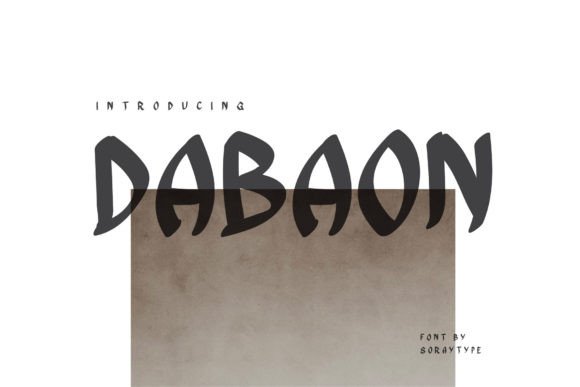
In the vast landscape of digital typography, finding a typeface that feels genuinely human can be a challenge. Most fonts strive for geometric perfection, clean lines, and uniform spacing. While these qualities are essential for body text and formal documents, they often lack the warmth and spontaneity required to capture attention in a crowded visual space. This is where Dabaon enters the conversation. As a lively, all-caps marker display font crafted by hand, it offers a distinct alternative to sterile digital standards. Its playful strokes bring a handmade charm to your text, making it stand out with a unique and expressive style.
Understanding whether Dabaon is the right choice for your project requires looking beyond its aesthetic appeal. It is about matching the personality of the typeface with the intent of your message. For some, it is a tool for rapid prototyping; for others, it is the cornerstone of a brand identity that values approachability over authority. Let us explore how different creators and professionals can leverage this font to enhance their visual communication.
Why Handcrafted Typography Matters
The rise of digital design has led to a saturation of polished, vector-perfect imagery. In response, audiences have developed a craving for authenticity. Hand-drawn elements signal effort, personality, and a human touch. Dabaon capitalizes on this trend by mimicking the irregularities of a real marker pen. The varying stroke widths, the slight imperfections in letterforms, and the energetic rhythm of the characters create a sense of immediacy.
This is not just about looking "cool." It is about psychological connection. When a viewer sees text that looks like it was written by a person, they often perceive the message as more friendly, urgent, or creative. For marketers and bloggers, this can significantly increase engagement rates. A headline set in Dabaon feels like a invitation rather than a command. It breaks the fourth wall of the screen, suggesting that there is a human being on the other side of the content.
Perspectives from Different Creators
The value of Dabaon shifts depending on who is holding the mouse. A graphic designer working on a corporate annual report will have different needs than a social media manager creating Instagram stories. Here is how various groups might evaluate and utilize this typeface.
For Beginners and Hobbyists
If you are new to design, one of the biggest hurdles is knowing how to pair fonts effectively. Complex serif and sans-serif combinations require an eye for balance and contrast. Dabaon simplifies this process because it is a display font meant to stand alone. Its bold, all-caps nature means it does not need a partner to feel complete. Beginners can use it for posters, greeting cards, or personal blogs without worrying about intricate typographic rules. The primary priority here is ease of use. You type, you adjust the size, and the font does the heavy lifting regarding personality.
For Entrepreneurs and Small Business Owners
Small businesses often compete with larger corporations by emphasizing their local, personal, or artisanal roots. A bakery, a craft brewery, or a boutique clothing store can use Dabaon to reinforce this narrative. Imagine a chalkboard menu special written in Dabaon, or a packaging label for a small-batch hot sauce. The font communicates "handmade" and "small-scale" instantly. For these users, the key consideration is brand alignment. Does the playful nature of the font match the tone of the business? If the brand is serious, legal, or medical, Dabaon is likely a mismatch. But for lifestyle brands, it adds a dash of creativity and fun that resonates with customers seeking authenticity.
For Educators and Content Creators
Teachers and educational content creators face the challenge of making information engaging. Dry textbooks often fail to retain student attention. By incorporating Dabaon into slide decks, worksheets, or video thumbnails, educators can highlight key concepts in a way that feels less intimidating. The marker style resembles notes taken in a classroom, creating a subconscious link to learning and discovery. However, readability is crucial. Since Dabaon is an all-caps display font, it should never be used for long paragraphs. Its best use case here is for emphasis—highlighting vocabulary words, section headers, or motivational quotes.
For Professional Designers and Marketers
Experienced designers know that novelty wears off quickly. A font that looks trendy today may look dated in six months. Therefore, professionals evaluate Dabaon based on its versatility and long-term usefulness. Can it be integrated into a broader design system? Yes, but with constraints. A professional might use Dabaon for a campaign launch to create buzz, pairing it with a neutral, highly legible sans-serif for the supporting copy. This contrast allows the marker font to shine without overwhelming the viewer. Marketers also care about conversion. A/B testing headlines often shows that informal, human-centric fonts can outperform standard corporate fonts in click-through rates for casual or lifestyle products.
Practical Applications and Best Practices
To get the most out of Dabaon, it is helpful to understand its technical and aesthetic boundaries. Because it is crafted to look like a marker, it thrives in high-contrast environments. White text on a dark background, or black text on a bright, solid color, allows the irregular edges of the letters to pop. Using it on busy photographic backgrounds can reduce legibility, as the detailed texture of the photo competes with the textured strokes of the font.
- Social Media Graphics: Use Dabaon for short, punchy quotes or announcement headers. Keep the text under five words for maximum impact.
- Packaging Design: Ideal for product names or taglines on artisanal goods. It suggests quality and care.
- Web Headers: Effective for hero sections on landing pages where the goal is to establish a friendly, creative tone immediately.
- Presentation Decks: Use for slide titles to break up the monotony of standard bullet points.
It is also important to consider spacing. Hand-drawn fonts often have unique kerning pairs. What looks good in one word might look cramped in another. Always review your text at the actual size it will be displayed. Adjust letter spacing manually if necessary to ensure the "air" around each character feels balanced. This attention to detail separates amateur usage from professional application.
Evaluating Fit for Your Project
Before downloading or purchasing Dabaon, ask yourself a few critical questions. First, what is the emotional tone of my project? If the answer is serious, somber, or strictly informational, this font is likely not the right tool. Second, how much text do I need to display? If you are writing paragraphs, look elsewhere. Dabaon is a sprinter, not a marathon runner. It is designed for short bursts of energy.
Third, consider your audience. Are they looking for reliability and tradition, or are they open to experimentation and fun? A law firm’s website would confuse visitors with a marker font, while a children’s museum’s app would feel cold without one. Understanding these nuances helps you avoid stylistic mismatches that can undermine your credibility.
Ultimately, Dabaon is more than just a set of glyphs. It is a design decision that signals a specific attitude. It says, "We are approachable. We are creative. We are human." Whether you are a freelancer looking to add variety to your portfolio, a blogger wanting to spice up your headers, or a business owner trying to connect with your community, this font offers a straightforward way to inject personality into your work. By respecting its limitations and leveraging its strengths, you can create visual expressions that are not only seen but felt.