Golsaeme Typeface: Evaluating a Bold Calligraphic Font for Design Projects
Choosing the right typography is one of the most critical decisions in graphic design. The typeface you select sets the tone, communicates the brand personality, and determines readability. Among the myriad of options available, Golsaeme has emerged as a distinctive choice for designers seeking a blend of modern boldness and traditional calligraphic flair. This article provides an objective evaluation of Golsaeme, exploring its characteristics, ideal use cases, and limitations to help you determine if it aligns with your specific design goals.
Understanding the Golsaeme Aesthetic
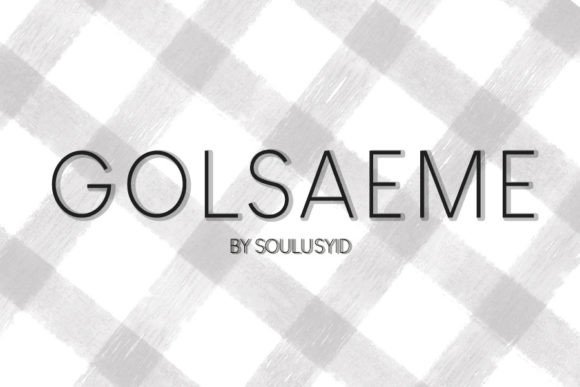
Golsaeme is defined by its bold, dynamic structure combined with simple calligraphy elements. Unlike standard sans-serif or serif fonts that prioritize uniformity and neutrality, Golsaeme introduces organic movement into letterforms. The "simple calligraphy" aspect refers to the subtle variations in stroke width and terminal shapes that mimic the natural flow of a hand-held pen, yet these are refined enough to maintain digital clarity.
The font’s boldness ensures high visibility, making it stand out in crowded visual environments. However, this weight is balanced by a certain simplicity in its construction. It avoids excessive ornamentation or complex ligatures that can clutter a design. For designers, this means Golsaeme offers a middle ground: it is more expressive than a utilitarian grotesque font but more structured and legible than a highly decorative script.
Why Designers Consider Golsaeme
When evaluating typefaces, designers often look for specific functional and aesthetic traits. Golsaeme appeals to those who need to inject energy into a project without sacrificing professionalism. Here are the primary reasons this font attracts attention:
- Visual Impact: The bold weight commands attention immediately, which is essential for headlines and posters where capturing viewer interest is the primary objective.
- Human Touch: The calligraphic nuances add a human element to digital designs, helping brands appear more approachable and authentic rather than cold or corporate.
- Versatility in Display: While not suitable for long body text, it performs exceptionally well in short bursts of text, such as titles, quotes, and logos.
- Modern Yet Timeless: By blending contemporary boldness with traditional calligraphic roots, it avoids looking overly trendy or dated quickly.
Ideal Use Cases for Golsaeme
To maximize the effectiveness of Golsaeme, it is crucial to deploy it in contexts that leverage its strengths. The font shines in scenarios where brevity and impact are paramount.
Headlines and Titles
The most natural habitat for Golsaeme is in large-scale headlines. Whether for magazine covers, website hero sections, or blog post titles, the font’s dynamic nature draws the eye. Its legibility at large sizes ensures that the message is conveyed clearly while maintaining stylistic interest.
Poster and Event Promotion
Posters require immediate communication. Golsaeme’s energy makes it an excellent candidate for event flyers, concert posters, or promotional materials. The font can convey excitement and movement, which is particularly useful for cultural, artistic, or lifestyle events.
Branding and Logotypes
For brands aiming to project confidence and creativity, Golsaeme can serve as a strong foundation for logotypes. Its unique character helps differentiate a brand from competitors using generic sans-serif fonts. However, it is best suited for brands in creative industries, fashion, food and beverage, or lifestyle sectors where personality is a key differentiator.
Social Media Graphics
In the fast-scrolling environment of social media, static images must grab attention quickly. Golsaeme works well for quote graphics, announcement cards, and story headers. Its boldness ensures readability even on small mobile screens, provided the text volume is kept low.
Tradeoffs and Limitations
While Golsaeme offers significant aesthetic benefits, it is not a universal solution. Understanding its limitations is just as important as recognizing its strengths. Ignoring these tradeoffs can lead to poor user experience and ineffective communication.
Readability in Body Text: The most significant limitation of Golsaeme is its unsuitability for long-form content. The calligraphic details and bold weight can cause visual fatigue when read in paragraphs. For body copy, articles, or detailed instructions, pairing Golsaeme with a clean, neutral sans-serif or serif font is necessary. Using it for extended text will likely reduce comprehension and engagement.
Space Requirements: Bold fonts generally require more breathing room. Golsaeme’s dynamic forms may need increased letter-spacing (tracking) and line-height to prevent characters from appearing cramped. In tight layouts or small containers, the font might lose its clarity and appear muddy.
Tone Mismatch: The energetic and bold nature of Golsaeme may clash with brands that require a serious, conservative, or minimalist tone. For example, financial institutions, legal firms, or medical organizations might find the font too informal or aggressive for their primary branding needs.
Comparing Golsaeme to Alternatives
When selecting a display font, it is helpful to consider how Golsaeme compares to other categories. If your project requires high legibility and neutrality, a standard geometric sans-serif like Helvetica or Futura might be a safer choice. These fonts lack the personality of Golsaeme but offer superior versatility across various mediums.
Conversely, if your goal is maximum elegance and sophistication, a high-contrast serif or a delicate script might be more appropriate. Golsaeme sits in the "bold casual" niche. It is less formal than a traditional serif but more structured than a freehand brush script. If you need something more playful and irregular, a hand-drawn font might be better. If you need something more authoritative, a heavy slab serif could be a stronger alternative.
Practical Decision-Making Insights
To decide if Golsaeme is the right fit for your project, consider the following checklist:
- Define the Primary Goal: Is the text meant to be read for information or scanned for impact? If the latter, Golsaeme is a strong candidate.
- Assess the Brand Personality: Does your brand value energy, boldness, and approachability? If yes, Golsaeme aligns well. If your brand values tradition, restraint, or minimalism, proceed with caution.
- Evaluate the Medium: Will the font be used primarily in digital displays, print posters, or packaging? Golsaeme excels in large-format print and digital headers but struggles in small-print applications like footnotes or captions.
- Consider Pairing Options: Do you have a complementary body font? Ensure you have a neutral typeface ready to balance Golsaeme’s dominance in your layout.
Final Thoughts on Selecting Golsaeme
Golsaeme is a specialized tool in a designer’s toolkit. It is not a default font for every project, but it is a powerful asset for specific applications. Its value lies in its ability to communicate energy and confidence through simple calligraphic forms. When used strategically in headlines, posters, and eye-catching designs, it can elevate a project from ordinary to memorable.
However, successful implementation requires discipline. Resist the urge to overuse it. Let Golsaeme serve as the accent, the headline, or the focal point, while relying on more subdued typefaces for supporting information. By respecting its limitations and leveraging its strengths, you can create designs that are both visually striking and functionally effective. Ultimately, the decision to use Golsaeme should be driven by the specific communicative needs of your project and the emotional response you wish to evoke in your audience.