Integrating Aksara Astral into Modern Design Workflows
In the landscape of contemporary graphic design, the pendulum often swings between ultra-minimalist modernism and rich, character-driven nostalgia. For designers, marketers, and content creators looking to inject personality into their projects, Aksara Astral offers a compelling solution. This typeface is not merely a decorative element; it is a strategic asset that bridges the gap between retro aesthetics and modern digital requirements. By bringing back the cool vibes of the 1970s with its distinct retro font style, Aksara Astral allows professionals to create visual narratives that feel both familiar and fresh.
Understanding how to effectively implement this font requires more than just downloading a file. It demands a clear workflow that considers brand consistency, readability, and technical compatibility. Whether you are a freelancer crafting a poster for a local event, a small business owner updating your social media presence, or a marketer designing a campaign header, integrating Aksara Astral involves specific planning and execution steps. This guide explores how to seamlessly incorporate this groovy, nostalgic typeface into your creative process, ensuring it enhances rather than overwhelms your final output.
The Strategic Role of Retro Typography in Branding
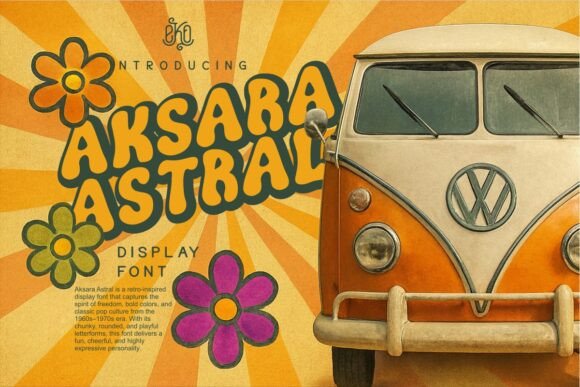
Before diving into the technical implementation, it is crucial to understand where Aksara Astral fits within a broader branding strategy. The 1970s aesthetic is characterized by warmth, organic shapes, and a sense of playful rebellion. When you choose Aksara Astral, you are making a deliberate decision to evoke these emotions. This font exudes a groovy, nostalgic feel, perfect for giving your project a touch of that disco-era flair. However, its application must be intentional.
In a professional workflow, typography selection usually occurs during the initial concept phase. If your goal is to communicate approachability, creativity, or a connection to heritage, Aksara Astral serves as a primary visual anchor. It interacts with other design elements by setting the tone for color palettes and imagery. For instance, the funky shapes and vintage charm of the font pair exceptionally well with earthy tones, mustard yellows, and burnt oranges. Recognizing this synergy early in the planning stage prevents disjointed designs later in the production process.
Pre-Production: Preparation and Compatibility Checks
Successful integration of any new asset begins with preparation. Before applying Aksara Astral to a live project, assess its compatibility with your existing tools and platforms. Most modern design software, including Adobe Creative Cloud applications, Canva, and Figma, support custom font uploads. Ensure that the file format (typically OTF or TTF) is compatible with your operating system and design environment.
Organization is key to maintaining efficiency. Create a dedicated folder for your typography assets, labeling them clearly to avoid confusion with similar retro styles. If you are working in a team environment, establish a shared library where Aksara Astral is accessible to all collaborators. This step ensures consistency across multiple deliverables and prevents version control issues. Additionally, review the licensing terms. Understanding whether the font is free for personal use or requires a commercial license is a critical part of the procurement process, protecting your business from legal complications down the line.
Implementation: Balancing Flair with Functionality
Once the technical groundwork is laid, the focus shifts to actual design implementation. Aksara Astral adds a playful and retro vibe to any text, making it a fun choice for posters, headlines, or anything that calls for a blast from the past. However, its distinctive characteristics mean it should be used strategically to maintain readability and visual hierarchy.
Headlines and Display Text
The primary strength of Aksara Astral lies in its display capabilities. Use it for headlines, titles, and short phrases where impact is prioritized over lengthy reading. In a poster design, for example, let Aksara Astral dominate the upper third of the layout. Its bold, curved letters draw the eye immediately, establishing the theme before the viewer processes any secondary information. When using it in this capacity, pay attention to kerning and leading. Retro fonts often have unique spacing requirements; adjusting these manually can significantly improve the professional quality of the final piece.
Pairing with Neutral Typefaces
To prevent visual fatigue, pair Aksara Astral with a clean, neutral sans-serif or serif font for body text. This contrast creates a balanced composition where the retro font acts as the accent, and the neutral font handles the informational load. For instance, if you are designing a menu for a themed restaurant, use Aksara Astral for section headers like "Starters" or "Drinks," but switch to a highly legible sans-serif for the item descriptions and prices. This approach respects the user’s need for clarity while still delivering the desired aesthetic experience.
Workflow Integration Across Different Media
The versatility of Aksara Astral allows it to function effectively across various media types. Understanding how to adapt its use for different platforms is essential for a cohesive multi-channel strategy.
- Digital Marketing: In social media graphics, Aksara Astral can increase engagement by standing out in crowded feeds. Use it for quote cards, event announcements, or promotional banners. Keep text minimal to ensure the font’s shapes remain legible on smaller mobile screens.
- Print Materials: For flyers, brochures, and packaging, the font’s vintage charm adds tactile appeal. When preparing files for print, ensure you outline the text or embed the font to avoid substitution errors. High-resolution outputs will capture the nuanced curves and details of the letterforms.
- Web Design: While web fonts require careful handling to maintain load speeds, Aksara Astral can be used for hero sections or call-to-action buttons. Use CSS to control weight and size, ensuring it renders correctly across different browsers and devices.
Get ready to groove with Aksara Astral and infuse your design with some 70s magic, but always keep the user experience in mind. In digital environments, test the legibility of the font at various sizes. If the intricate details become muddy at smaller scales, reserve the font for larger elements only.
Quality Control and Consistency
Maintaining quality control is an ongoing part of the design process. As you integrate Aksara Astral into multiple projects, develop a style guide that dictates its usage. Define specific rules for color combinations, minimum sizes, and acceptable pairings. This documentation helps maintain brand integrity, especially if multiple designers are contributing to the same ecosystem.
Regularly review your outputs against these standards. Does the font feel forced in certain contexts? Is it overwhelming the message? Effective design is about subtraction as much as addition. If Aksara Astral distracts from the core message, consider scaling back its usage or switching to a subtler weight if available. The goal is to enhance communication, not hinder it.
Long-Term Value and Adaptability
Investing time in mastering a distinctive typeface like Aksara Astral yields long-term benefits. It becomes a recognizable part of your visual vocabulary, allowing you to create consistent, high-quality work efficiently. Over time, you will develop an intuition for when this font is the right choice and when a different style is more appropriate. This discernment is a hallmark of experienced designers and marketers.
Furthermore, retro trends tend to cycle in and out of popularity. By understanding the underlying principles of why Aksara Astral works—its balance of nostalgia and modern usability—you can adapt its application as trends evolve. You might find new ways to combine it with contemporary design elements, creating hybrid styles that feel both timeless and current.
In conclusion, Aksara Astral is more than just a font; it is a tool for storytelling. By approaching its integration with a structured workflow—covering preparation, implementation, pairing, and quality control—you can maximize its potential. Whether you are designing a single poster or building a comprehensive brand identity, this typeface offers a unique opportunity to connect with audiences through the universal language of retro cool. Embrace the process, experiment with confidence, and let the groovy vibes of the 70s elevate your creative projects.