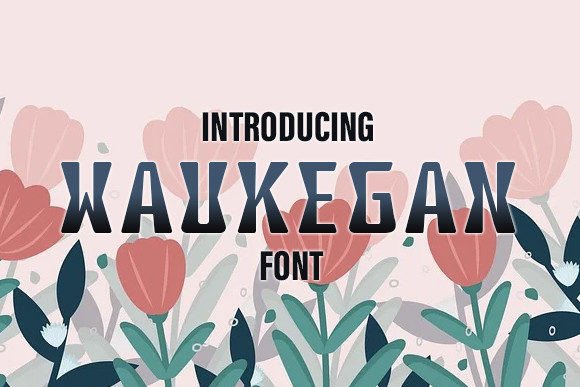
Waukegan: Bold Typography for Modern Design
In the crowded landscape of digital and print media, typography is often the first element that captures attention. It sets the tone before a single word is read. Among the myriad options available to designers, Waukegan stands out as a distinctive choice. This unique typeface bridges the gap between retro nostalgia and contemporary minimalism, offering a versatile tool for creators who want their work to resonate with clarity and style. Whether you are designing a poster for a local event, crafting flyers for a small business, or printing custom t-shirts, Waukegan provides the structural integrity and visual flair needed to make an impact.
Understanding the Character of Waukegan
To use a font effectively, one must understand its personality. Waukegan is not merely a collection of letters; it is a design statement. Its geometric roots give it a clean, organized appearance, while subtle irregularities in the stroke width add a human touch that prevents it from feeling sterile or overly mechanical. This balance makes it particularly interesting for projects that require both professionalism and approachability.
The font’s high x-height ensures excellent readability, even at smaller sizes or from a distance. This characteristic is crucial for practical applications like signage or informational flyers where quick comprehension is key. At the same time, its bold weights command attention, making it ideal for headlines that need to stop scrolling thumbs or walking feet. By choosing Waukegan, you are selecting a typeface that respects the viewer’s time while demanding their attention.
Practical Applications in Print Media
Print media remains a powerful channel for communication, and Waukegan shines in this arena. Its robust structure holds up well against the textures of paper and ink, avoiding the fragility that plagues thinner, more delicate fonts.
Event Posters and Flyers
When designing posters for concerts, community gatherings, or art exhibitions, hierarchy is essential. Waukegan allows for clear differentiation between the headline, date, and location. Use the boldest weight for the main event title to create an immediate focal point. For secondary information, such as ticket prices or venue details, switch to a lighter weight or reduce the size significantly. The contrast between these elements creates a visual rhythm that guides the eye naturally down the page.
For flyers, where space is often limited, efficiency is paramount. Waukegan’s compact letterforms allow you to fit more information without sacrificing legibility. Consider using all-caps for short, punchy headlines to maximize impact. Pairing the font with ample white space can elevate a simple flyer into a sophisticated piece of design, proving that less is often more.
Merchandise and Apparel
T-shirt design requires a different approach. The text must be readable when moving and from various angles. Waukegan’s solid forms make it an excellent candidate for apparel graphics. It works particularly well for streetwear brands or organizations looking to project a sense of unity and strength.
When applying Waukegan to t-shirts, consider the placement carefully. Centered chest logos benefit from the font’s symmetry, while back prints can utilize longer phrases or quotes. Because the font has a distinct character, it often does not need heavy embellishment. Let the typography speak for itself. A simple, two-color scheme using Waukegan can look more premium than a complex, multi-layered graphic.
Digital Presence and Branding
While rooted in print aesthetics, Waukegan translates seamlessly to digital platforms. In an era where screen real estate is valuable, clarity is king. This typeface performs well on websites, social media graphics, and digital advertisements.
- Social Media Graphics: Use Waukegan for quote cards or announcement posts. Its boldness ensures that text remains legible even on small mobile screens.
- Website Headers: Implement the font in hero sections to establish brand identity immediately. Pair it with a neutral sans-serif body font to maintain readability for long-form content.
- Email Newsletters: Break up text-heavy emails with Waukegan subheadings. This helps subscribers scan content quickly and find the information most relevant to them.
For entrepreneurs and small business owners, consistency across these platforms builds trust. Using the same typeface for your Instagram stories, website banners, and physical business cards creates a cohesive brand experience. Waukegan’s versatility allows it to adapt to different contexts without losing its core identity.
Creative Strategies for Maximum Impact
Using a font like Waukegan effectively requires more than just typing out words. It involves thoughtful composition and an understanding of design principles. Here are several strategies to help you get the most out of this typeface.
Playing with Scale and Weight
One of the most effective ways to create visual interest is by manipulating scale. Try setting a single word in an extremely large size, allowing it to bleed off the edges of the canvas. This technique works well for posters and album covers, creating a dynamic and modern look. Combine this with smaller, finer text to provide context. The juxtaposition of massive, bold letters against tiny, delicate details creates tension and engagement.
Color and Contrast
Waukegan’s thick strokes provide a large surface area for color experimentation. Do not be afraid to use vibrant, saturated colors for the font against neutral backgrounds, or vice versa. High contrast ensures accessibility and visibility. For a more subdued, professional look, consider using monochromatic schemes with varying shades of gray or navy. This approach emphasizes the shape of the letters rather than the color, highlighting the font’s geometric precision.
Pairing with Complementary Fonts
While Waukegan is strong enough to stand alone, pairing it with other typefaces can expand its utility. It pairs well with simple, humanist sans-serifs for body text, as these do not compete for attention. Avoid pairing it with other display fonts that have similar geometric characteristics, as this can create visual clutter. Instead, look for contrasts in style—such as a classic serif for a touch of elegance—to create a balanced and sophisticated composition.
Tailoring Designs to Your Audience
Different audiences respond to different visual cues. Understanding who you are speaking to allows you to adapt Waukegan to meet their expectations.
For younger demographics, lean into the bold, expressive capabilities of the font. Use unconventional layouts, bright colors, and playful kerning adjustments. This approach feels energetic and current.
For professional or corporate audiences, prioritize structure and alignment. Use standard spacing, conservative color palettes, and clear hierarchies. Here, Waukegan conveys reliability and strength without appearing aggressive.
For creative communities, experiment with texture and overlay effects. Waukegan holds up well when subjected to grain, noise, or distortion filters, allowing for gritty, artistic interpretations that appeal to designers and artists.
Maintaining Clarity and Consistency
Regardless of the creative direction you choose, clarity should never be compromised. Ensure that there is sufficient contrast between the text and the background. Check your designs on multiple devices and in different lighting conditions to verify readability. Consistency in usage—such as maintaining uniform spacing and capitalization rules—helps reinforce brand recognition and professional polish.
By treating Waukegan not just as a font, but as a foundational element of your design strategy, you unlock its full potential. It is a tool that invites experimentation while providing the stability needed for effective communication. Whether you are a seasoned designer or a hobbyist looking to elevate your projects, embracing the unique qualities of Waukegan can inspire designs that are both visually striking and functionally sound.