Sidewalk: A Bold Display Font for Modern Creatives
There is a distinct moment in the design process when a project feels flat, not because of the imagery or the color palette, but because the typography lacks character. You need a typeface that does more than just convey information; you need one that sets a tone. This is where Sidewalk enters the conversation. As a cool and unique display font, it bridges the gap between structural rigidity and playful creativity, making it an ideal candidate for magazines, crafts, and bold branding initiatives.
Unlike standard sans serif fonts that prioritize invisibility, or traditional serif fonts that lean heavily on historical precedent, Sidewalk offers a contemporary edge. It is designed to be seen. When you add it to your fonts library, you are not just acquiring another file; you are gaining a versatile tool capable of transforming ordinary layouts into spectacular designs. Its appeal lies in its ability to command attention without sacrificing readability, a balance that is often difficult to achieve in modern typography.
Visual Personality and Design Characteristics
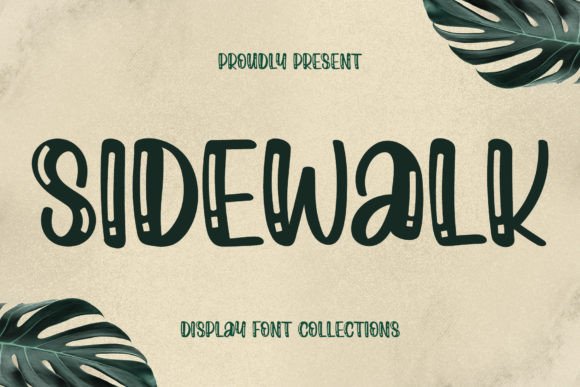
To understand why Sidewalk works so well across diverse mediums, we must first look at its anatomy. It possesses the clean lines associated with high-quality sans serif fonts, yet it introduces subtle quirks that give it a handwritten or crafted feel. This duality is its greatest strength. The strokes are uniform enough to maintain professionalism, but the terminals and curves have a distinct personality that prevents the text from feeling sterile or corporate.
The font’s weight distribution is particularly noteworthy. It is heavy enough to serve as a dominant headline element but retains enough openness in the counterforms (the enclosed spaces within letters like 'o' or 'e') to ensure legibility even at smaller sizes. This makes it a rare hybrid: a display font that can occasionally stretch its legs into body copy territory for short-form content, such as social media captions or pull quotes.
For designers working in editorial design, this characteristic is invaluable. Magazines require typefaces that can handle large-scale headlines while maintaining a cohesive visual narrative throughout the spread. Sidewalk provides that anchor. Its geometric foundation offers stability, while its stylistic nuances add the warmth necessary for lifestyle, fashion, or artisanal publications. It feels approachable, suggesting that the brand behind the text is both confident and human.
Strategic Applications in Branding and Marketing
When building a brand identity, consistency is key, but so is memorability. A generic typeface can make a business blend into the background, whereas a creative font like Sidewalk helps establish immediate recognition. Consider its application in logo design. Because the letterforms are distinct, they create a strong visual hook. Whether you are designing a logo for a boutique coffee shop, a tech startup, or a handmade jewelry line, Sidewalk conveys a sense of modern craftsmanship.
In the realm of packaging design, the font’s versatility shines. Packaging requires typography that works in three-dimensional space, often viewed from a distance or in low-light conditions. The bold structure of Sidewalk ensures that product names stand out on crowded shelves. Furthermore, its aesthetic aligns well with current trends in minimalist yet textured design. It pairs exceptionally well with organic materials like kraft paper or matte finishes, enhancing the perceived value of the product.
For marketers and content creators, the utility of Sidewalk extends into digital spaces. Social media graphics demand quick comprehension and high visual impact. When used in Instagram stories, Pinterest pins, or YouTube thumbnails, the font’s clear hierarchy helps guide the viewer’s eye. It allows for effective font pairing strategies. For instance, combining Sidewalk with a neutral, highly readable sans serif for body text creates a dynamic contrast. The display font handles the emotional heavy lifting, while the secondary font ensures the message is easily digestible.
Enhancing Readability and Visual Hierarchy
A common misconception about display fonts is that they sacrifice function for form. However, when used correctly, a typeface like Sidewalk actually enhances visual hierarchy. By reserving this font for headings, subheadings, and call-to-action buttons, you create clear signposts for the reader. This segmentation breaks up large blocks of text, making content less intimidating and more engaging.
Readability is not just about letter recognition; it is about flow. Sidewalk’s consistent spacing and balanced proportions contribute to a smooth reading experience. In web design, this translates to lower bounce rates. When users can quickly scan a page and identify key information, they are more likely to stay engaged. For publishers and bloggers, this means using Sidewalk to highlight key takeaways or chapter titles, effectively guiding the audience through the narrative.
Moreover, the font influences brand perception. A well-chosen typeface signals professionalism and attention to detail. Using a premium font like Sidewalk suggests that a business invests in quality assets. This subtle cue builds trust with the audience. In contrast, mismatched or outdated typography can undermine credibility, regardless of how strong the underlying product or service is. By integrating Sidewalk into your design assets, you elevate the overall aesthetic coherence of your communications.
Practical Guidance for Implementation
Integrating a new typeface into your workflow requires more than just installation. To get the most out of Sidewalk, consider the following practical steps:
- Evaluate Project Fit: Before committing, ask if the project benefits from a strong personality. Sidewalk is ideal for brands that want to appear modern, approachable, and stylish. It may be less suitable for highly formal legal or financial documents where traditional serifs are expected.
- Test Font Pairings: Experiment with different combinations. Try pairing Sidewalk with a light, geometric sans serif for a clean, modern look, or with a subtle script font for a more eclectic, artistic vibe. Always check the contrast in weight and style to ensure the pairing feels intentional rather than accidental.
- Review Included Styles: Check if the font family includes various weights (light, regular, bold) or italics. Having multiple styles allows for greater flexibility in creating hierarchy within a single design. If Sidewalk offers these variants, use them to differentiate between primary and secondary headings.
- Consider Licensing: Always verify the commercial font license. Ensure that your intended use—whether for client work, personal projects, or mass-produced merchandise—is covered. Investing in proper licensing protects both you and your clients from legal issues and supports the type designer.
- Check Readability at Scale: Print a test sheet or view the font on multiple devices. What looks good on a large monitor may behave differently on a mobile screen. Adjust tracking (letter-spacing) and leading (line-height) as needed to optimize legibility.
Ultimately, Sidewalk is more than just a collection of letters; it is a design asset that empowers creators to communicate with clarity and style. Whether you are a hobbyist crafting wedding invitations, an entrepreneur launching a new product line, or a seasoned designer refining a corporate identity, this font offers the unique blend of structure and flair needed to make your work stand out. By understanding its characteristics and applying it strategically, you can create designs that are not only visually spectacular but also functionally effective.