Unleashing Urban Attitude: Why Break Enemy Is the Ultimate Graffiti Font for Modern Design
In the saturated world of graphic design, capturing attention requires more than just a clever image; it demands typography that speaks with volume. For designers working within the realms of streetwear, music promotion, and urban culture, standard sans-serifs often fall flat. They lack the grit, the history, and the raw energy that defines the streets. This is where Break Enemy enters the conversation. As an urban graffiti font characterized by sharp edges and a bold look, it serves as a powerful tool for creatives who need to make an immediate, visceral impact.
The aesthetic of modern design is increasingly leaning toward authenticity and ruggedness. Consumers, particularly in the youth demographic, are drawn to brands and media that feel unpolished yet intentional. Break Enemy bridges the gap between chaotic street art and professional typographic structure. It offers the rebellious spirit of spray paint without the illegibility that often plagues authentic graffiti scripts. By understanding how to leverage this typeface, designers can elevate their projects from generic to iconic.
The Anatomy of Edge: Visual Characteristics of Break Enemy
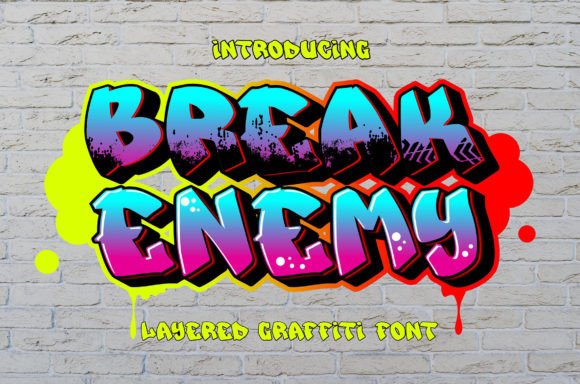
To truly utilize Break Enemy, one must first appreciate its structural nuances. Unlike rounded or soft-edged display fonts, this typeface is defined by its aggression. The letters are constructed with acute angles and heavy strokes, mimicking the quick, decisive movements of a marker or a wide-cap spray nozzle. These sharp edges are not merely decorative; they convey a sense of urgency and danger that is central to the urban graffiti ethos.
The boldness of the font ensures high visibility. In design, weight matters. A light font whispers, but Break Enemy shouts. This characteristic makes it exceptionally suitable for headlines and short, punchy statements where the text needs to compete with vibrant imagery or complex backgrounds. The unique style of Break Enemy creates a distinct silhouette, allowing it to stand out even when scaled down for smaller applications like tags on apparel or social media thumbnails.
Furthermore, the font maintains a level of readability that is rare in the graffiti genre. Many urban fonts sacrifice clarity for style, resulting in letterforms that are difficult to decipher. Break Enemy strikes a balance. It retains the jagged, broken aesthetics of wall art while keeping the letterforms recognizable. This functionality is crucial for commercial applications where the message must be understood instantly.
Dominating the Streetwear and Apparel Market
The intersection of fashion and typography has never been more significant. Streetwear, in particular, relies heavily on text-based designs to communicate brand identity and cultural alignment. When designing for shirts, hoodies, and caps, the choice of font can dictate the entire vibe of the garment. Break Enemy is ideal for apparel designs because it carries an inherent coolness that resonates with skate, hip-hop, and punk subcultures.
Consider the application on a black oversized tee. A simple white logotype using Break Enemy across the chest creates a stark, high-contrast look that is both minimalist and aggressive. It suggests a brand that is confident and unapologetic. For more complex designs, the font can be layered over distressed textures, concrete backgrounds, or photographic elements. Its sharp edges interact dynamically with these textures, creating a sense of depth and movement.
Designers should also consider the placement. Because Break Enemy is so visually loud, it works best when given space to breathe. Crowding the letters with too many other graphical elements can dilute its impact. Instead, let the typography be the hero. Whether it is a single word emblazoned on the back of a jacket or a small, edgy logo on the sleeve, this font brings a touch of attitude that transforms basic clothing into statement pieces.
Amplifying Music Posters and Event Promotion
The music industry, especially genres like rap, rock, metal, and electronic dance music, thrives on energy. Promotional materials for concerts, album covers, and mixtapes need to reflect the intensity of the sound. Break Enemy is the perfect choice for street style or urban graffiti themes in music marketing. It visually translates the distortion of a guitar amp or the heavy bass of a trap beat into a visual format.
When creating music posters, hierarchy is key. The artist’s name or the event title needs to dominate the composition. Using Break Enemy for these primary elements ensures they grab the viewer’s eye from a distance. The font’s bold look allows it to hold its own against bright neon colors, dark moody photography, or abstract glitch art. It provides a solid anchor in chaotic compositions.
Moreover, the font’s versatility allows for creative manipulation. Designers can stretch, skew, or overlay effects on Break Enemy without losing its core identity. Adding a glow effect can give it a cyberpunk feel, while applying a grunge texture can enhance its underground roots. This adaptability makes it a favorite among graphic designers who need to produce varied assets for a single campaign, from social media stories to large-format billboards.
Integrating Break Enemy into Modern Design Workflows
Adopting a new typeface into your workflow requires more than just installation; it requires a shift in perspective. When you choose Break Enemy, you are committing to a specific tonal direction. It is not a font for corporate reports or luxury wedding invitations. It is a tool for disruption. Understanding this context helps prevent misuse and ensures that the final output aligns with the intended message.
One practical consideration is pairing. Because Break Enemy is so dominant, it pairs best with neutral, understated secondary fonts. A clean, geometric sans-serif or a simple monospace font can provide a calm counterpoint to the chaos of the graffiti style. This contrast creates visual interest and guides the reader’s eye through the design. Avoid pairing it with other decorative or handwritten fonts, as this can create visual clutter and confusion.
Color theory also plays a vital role. While black and white is a classic combination for this font, do not shy away from bold, saturated colors. Electric blues, fiery oranges, and acid greens complement the sharp edges of Break Enemy beautifully. These colors enhance the urban, energetic feel and help the design pop in digital environments where screen brightness can wash out subtler tones.
Making a Strong Statement with Purpose
Ultimately, the decision to use Break Enemy should be driven by the desire to make a strong and powerful statement. In a digital landscape filled with noise, subtlety is often overlooked. Brands and artists who want to cut through the clutter need typography that commands respect. This font provides that authority.
Whether you are launching a new skate brand, promoting an underground music festival, or simply looking to add a touch of edginess to your personal projects, Break Enemy delivers. It is more than just a set of characters; it is a visual language that speaks to resilience, creativity, and rebellion. By integrating this font into your design toolkit, you gain the ability to communicate complex emotions quickly and effectively.
Remember that great design is about connection. Break Enemy connects with audiences who value authenticity and strength. It tells them that the content behind the design is just as bold as the letters themselves. So, when you are ready to break away from the mundane and inject some serious attitude into your work, let this urban graffiti font lead the way. The streets are waiting, and your designs should be loud enough to be heard.