Pinky Lovely: A Practical Evaluation of This Sweet Display Font for Modern Design Projects
In the expansive landscape of digital typography, finding a typeface that balances personality with usability can be a challenging endeavor. Designers often find themselves oscillating between overly complex script fonts that sacrifice readability and sterile sans-serifs that lack emotional resonance. Pinky Lovely emerges in this space as a sweet and eye-catching display font that attempts to bridge this gap. It is not merely a decorative element but a functional tool for designers seeking to inject warmth and approachability into their visual communications. Understanding its unique characteristics, technical specifications, and appropriate use cases is essential for making an informed decision about whether it belongs in your creative toolkit.
Defining the Aesthetic and Technical Profile
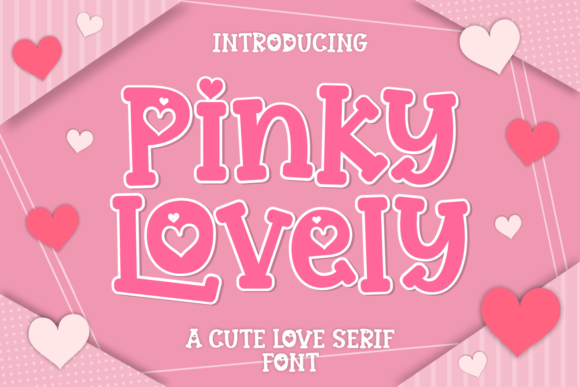
At its core, Pinky Lovely is defined by its playful yet refined aesthetic. It is categorized as a display font, which immediately signals that its primary strength lies in headlines, logos, and short-form text rather than long-body copy. The font’s design language is characterized by soft curves and a handwritten feel that mimics natural penmanship without the irregularities that often hinder legibility. What sets it apart from generic script options is the attention to detail in its ligatures and glyph construction.
The most distinctive feature of Pink Lovely is the sole outline of its ligatures. Unlike many script fonts where connections between letters can appear cluttered or inconsistent, this font utilizes a clean, outlined approach that enhances visibility. This design choice ensures that even when letters are connected, each character retains its individual identity. Furthermore, the distinctive way the font incorporates little hearts adds a layer of whimsy that is difficult to replicate with standard typographic adjustments. These hearts are not merely afterthoughts; they are integrated into the flow of the text, serving as both punctuation and decorative flourishes.
From a technical standpoint, the fact that the font is PUA (Private Use Area) encoded is a significant advantage for professional workflows. PUA encoding allows designers to access all delightful glyphs and swashes freely through standard character maps or OpenType panels in design software. This means you are not limited to the basic alphabet. You can easily substitute standard characters with alternate swashes, decorative endings, or contextual ligatures, providing a high degree of customization without needing advanced scripting knowledge or third-party plugins.
Comparative Analysis: Where Pinky Lovely Fits
To evaluate the true value of Pinky Lovely, it is helpful to compare it against broader categories of display typography. When considering alternatives, designers typically choose between rigid geometric scripts, casual brush fonts, and formal calligraphy. Each category has inherent tradeoffs.
- Formal Calligraphy: While elegant, formal scripts often feel too stiff for modern, casual branding. They can create a barrier between the brand and the audience, appearing exclusive rather than inviting. Pinky Lovely offers a more accessible alternative, maintaining elegance while reducing formality.
- Casual Brush Fonts: These fonts are popular for their energy but often suffer from poor legibility at smaller sizes. The thick strokes can blur together, and the irregular edges may not render well on all screens. Pinky Lovely mitigates this with its cleaner outlines and consistent stroke weight, offering better readability while retaining a hand-drawn feel.
- Geometric Scripts: These are highly legible but can lack soul. They often feel manufactured and cold. The unique heart accents and organic flow of Pink Lovely provide the human touch that geometric options frequently miss.
The comparison highlights that Pinky Lovely occupies a middle ground. It is not as rigid as formal calligraphy nor as chaotic as casual brush styles. This positioning makes it particularly versatile for projects that require a balance of professionalism and playfulness. For instance, a wedding invitation might lean too heavily on formal calligraphy, while a children’s party flyer might be too casual with a brush font. Pinky Lovely serves both contexts effectively by adjusting its tone through the use of swashes and ligatures.
Practical Use Cases and Best-Fit Scenarios
Identifying the right context for using Pinky Lovely is crucial for maximizing its impact. Because it is a display font, its effectiveness diminishes when used for extended paragraphs. However, in specific applications, it excels.
Branding and Logo Design
For businesses in the lifestyle, beauty, confectionery, or childcare sectors, the font’s sweet aesthetic aligns perfectly with brand values. The ability to customize ligatures allows logo designers to create unique wordmarks that stand out. The PUA encoding ensures that designers can experiment with different letter combinations to find the most visually appealing arrangement without being constrained by default settings.
Packaging and Product Labels
On product packaging, especially for items like artisanal chocolates, handmade soaps, or boutique candles, typography plays a critical role in conveying quality and care. The distinctive hearts and outlined ligatures of Pink Lovely add a tactile, crafted feel to digital designs. This helps products stand out on shelves where competitors might use generic sans-serif labels.
Social Media Graphics
In the fast-paced environment of social media, visuals must capture attention quickly. The eye-catching nature of this font makes it ideal for quote graphics, promotional banners, and story headers. The playful elements encourage engagement, as they feel personal and relatable rather than corporate.
Limitations and Decision Factors
While Pinky Lovely offers numerous benefits, it is not a universal solution. Recognizing its limitations is just as important as appreciating its strengths. The primary limitation is its readability at small sizes. The intricate details of the ligatures and hearts can become lost or appear muddy when scaled down for footnotes, legal disclaimers, or dense informational text. In these scenarios, pairing Pinky Lovely with a clean, neutral sans-serif font is a necessary strategy to maintain clarity.
Another consideration is the tonal fit. The font’s inherent sweetness and playful nature may not suit brands aiming for a serious, authoritative, or minimalist image. For financial institutions, law firms, or high-tech industrial companies, the whimsical elements might undermine the desired perception of stability and precision. In such cases, a more structured typeface would be a more appropriate choice.
Additionally, designers must consider the learning curve associated with PUA-encoded fonts. While accessing glyphs is straightforward, mastering the art of combining swashes and ligatures requires a keen eye for spacing and balance. Overusing the decorative elements can lead to cluttered designs that distract from the message. Therefore, restraint and thoughtful composition are key to leveraging this font effectively.
Making an Informed Choice
Choosing a typeface is a strategic decision that impacts how your audience perceives your message. Pink Lovely is a compelling option for designers who need a font that communicates warmth, creativity, and approachability. Its unique features, such as the outlined ligatures and integrated heart motifs, offer a distinct visual identity that is difficult to achieve with standard fonts. The PUA encoding further enhances its utility by providing extensive customization options.
However, it is essential to weigh these advantages against the specific requirements of your project. If your design demands high legibility at small sizes or a serious, corporate tone, alternative typefaces may be more suitable. Conversely, if your goal is to create an engaging, friendly, and visually interesting design for headings, logos, or short-form content, Pinky Lovely provides a robust and versatile solution. By understanding its strengths and limitations, you can determine whether this font aligns with your design objectives and enhances your overall visual strategy.