Vintage Rough: A Practical Guide to Using Retro Typography in Modern Design
In the landscape of contemporary graphic design, the appeal of nostalgia remains a powerful force. Designers and brand managers frequently seek typefaces that evoke a sense of history, authenticity, and warmth. Vintage Rough emerges as a compelling option in this space, offering a distinct blend of bold stylization and textured imperfection. It is not merely a font; it is a design tool crafted to inject character into headlines, logos, and packaging. However, selecting the right typography requires more than aesthetic preference. It demands an understanding of how a typeface functions within a broader visual system, its technical capabilities, and its suitability for specific mediums.
This analysis explores the unique attributes of Vintage Rough, comparing its utility against cleaner sans-serifs and other distressed display fonts. By examining its strengths, limitations, and ideal use cases, designers can make informed decisions about when this typeface serves their project best and when an alternative might be more appropriate.
Defining the Aesthetic: Texture and Form
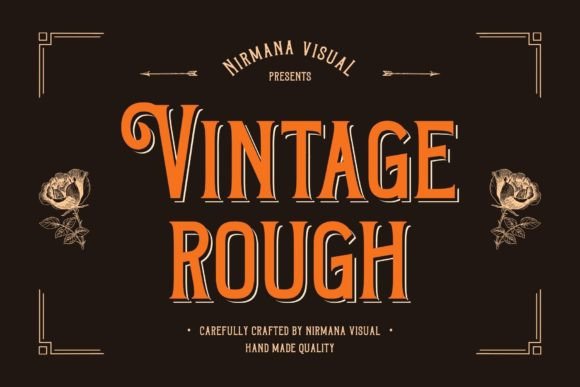
At its core, Vintage Rough is a vintage-inspired typeface designed to capture the essence of mid-20th-century advertising and signage. Its primary distinction lies in its texture. Unlike standard digital fonts that render with crisp, uniform edges, Vintage Rough incorporates intentional irregularities. These "rough" edges mimic the look of ink bleed on porous paper or the wear and tear of aged letterpress printing. This effect is crucial for establishing authenticity. In an era where digital perfection is the norm, slight imperfections signal humanity and heritage.
The structural design features bold, stylized letters with smooth curves that balance the rugged texture. This combination prevents the font from appearing merely damaged or illegible. Instead, it retains a strong geometric foundation that ensures readability at larger sizes. The weight of the characters commands attention, making it inherently suitable for eye-catching headlines rather than body text. When evaluating this font, one must recognize that its power comes from this duality: the solidity of its form and the fragility of its texture.
Technical Advantages: The Role of PUA Encoding
Beyond aesthetics, the technical construction of a font significantly impacts workflow efficiency. A notable feature of Vintage Rough is its PUA (Private Use Area) encoding. For designers unfamiliar with this term, PUA encoding allows access to special glyphs, ligatures, and swashes without the need for complex character map tools or third-party software.
In practical terms, this means that if you are using design software like Adobe Illustrator, Photoshop, or Affinity Designer, you can access alternate letterforms and decorative elements directly through the glyph panel or sometimes even via standard keystrokes, depending on the software’s support. This is a significant advantage over older or poorly constructed vintage fonts that may require manual copying and pasting of special characters from a PDF specimen sheet. The ability to effortlessly integrate swashes and alternates allows for greater customization. A designer can quickly adjust the spacing and flair of a logo to ensure it feels bespoke rather than generic. This technical ease reduces friction in the creative process, allowing for more rapid iteration and refinement.
Comparative Analysis: Vintage Rough vs. Clean Sans-Serifs
To understand where Vintage Rough fits in a design toolkit, it is helpful to compare it with its opposite: the clean, modern sans-serif. Fonts like Helvetica or Futura are staples of corporate identity due to their neutrality and high legibility. They communicate efficiency, modernity, and clarity. In contrast, Vintage Rough communicates warmth, tradition, and craftsmanship.
Consider a project for a craft coffee roaster. A clean sans-serif might suggest a tech-forward, streamlined supply chain. However, Vintage Rough would suggest small-batch roasting, historical brewing methods, and a cozy atmosphere. The choice here is not about which font is "better," but which narrative aligns with the brand’s values. Vintage Rough excels in contexts where storytelling and emotional connection are prioritized over pure informational efficiency. It is less effective for user interfaces, long-form articles, or technical documentation where neutrality and speed of reading are paramount.
Evaluating Alternatives Within the Display Category
Within the category of distressed or vintage display fonts, there are numerous alternatives. Some lean heavily into the "grunge" aesthetic, with extreme erosion and noise that can compromise legibility. Others are more subtle, offering only a hint of texture. Vintage Rough sits comfortably in the middle ground. It is bold enough to stand out but refined enough to remain professional.
When comparing it to other script-based vintage fonts, Vintage Rough offers superior readability. Script fonts often struggle with accessibility, particularly for users with visual impairments or when viewed on small screens. The block-letter structure of Vintage Rough maintains clear character recognition despite the textured edges. This makes it a safer choice for primary branding elements where consistent recognition is critical. However, if a project requires a flowing, handwritten feel—such as for a wedding invitation or a personal blog header—a script font might be more appropriate. Vintage Rough is structured and architectural, not fluid or casual.
Best-Fit Scenarios and Limitations
Identifying the right context for Vintage Rough is essential for maximizing its impact. Based on its characteristics, here are the scenarios where it performs best:
- Logo Design: Its bold weight and unique texture make it memorable for brands in the food, beverage, apparel, and artisanal sectors.
- Packaging: On product labels, especially for items like craft beer, organic soaps, or boutique chocolates, the font adds a tactile quality that complements physical materials like kraft paper or glass.
- Poster and Headline Design: For event posters, album covers, or magazine headers, the font creates immediate visual interest and sets a retro tone.
- Social Media Graphics: In feed posts where stopping the scroll is the goal, the high contrast and texture of Vintage Rough can draw the eye effectively.
Conversely, there are clear limitations. Designers should avoid using Vintage Rough for:
- Body Copy: The texture that looks charming at 72 points becomes visual noise at 12 points, causing eye strain and reducing readability.
- Low-Resolution Digital Displays: While screen technology has improved, highly textured fonts can sometimes appear muddy on low-DPI screens or when compressed heavily for web use.
- Corporate Financial Reports: The informal, nostalgic vibe clashes with the need for authority and precision in formal business documents.
Design Considerations for Implementation
Successfully integrating Vintage Rough into a layout requires thoughtful pairing and spacing. Because the font is bold and textured, it pairs well with simple, clean sans-serifs for supporting text. This contrast ensures that the headline stands out while the informational content remains easy to digest. Avoid pairing it with other decorative or serif fonts, as this can create visual clutter and dilute the impact of the vintage aesthetic.
Color also plays a pivotal role. Vintage Rough often shines in muted, earthy tones—ochre, slate blue, forest green, or burnt orange—that reinforce the nostalgic theme. However, it can also work in high-contrast black and white for a stark, modern-retro look. Designers should experiment with tracking (letter spacing). Increasing the spacing slightly can enhance the legibility of the textured edges and give the design a more premium, airy feel.
Making the Final Decision
Choosing a typeface is a strategic decision that balances aesthetic desire with functional necessity. Vintage Rough offers a robust solution for designers seeking to infuse projects with retro charm without sacrificing structural integrity. Its PUA encoding provides a technical edge that streamlines the creative workflow, allowing for easy customization of glyphs and swashes.
However, it is not a universal solution. It thrives in display roles where emotion and atmosphere are key, but it falters in environments requiring neutral, high-speed information transfer. By understanding these tradeoffs, designers can leverage Vintage Rough effectively, ensuring that it enhances the narrative of their project rather than distracting from it. Whether revitalizing a brand identity or crafting a standout poster, this typeface serves as a versatile tool for those who value the intersection of history and modern design principles.